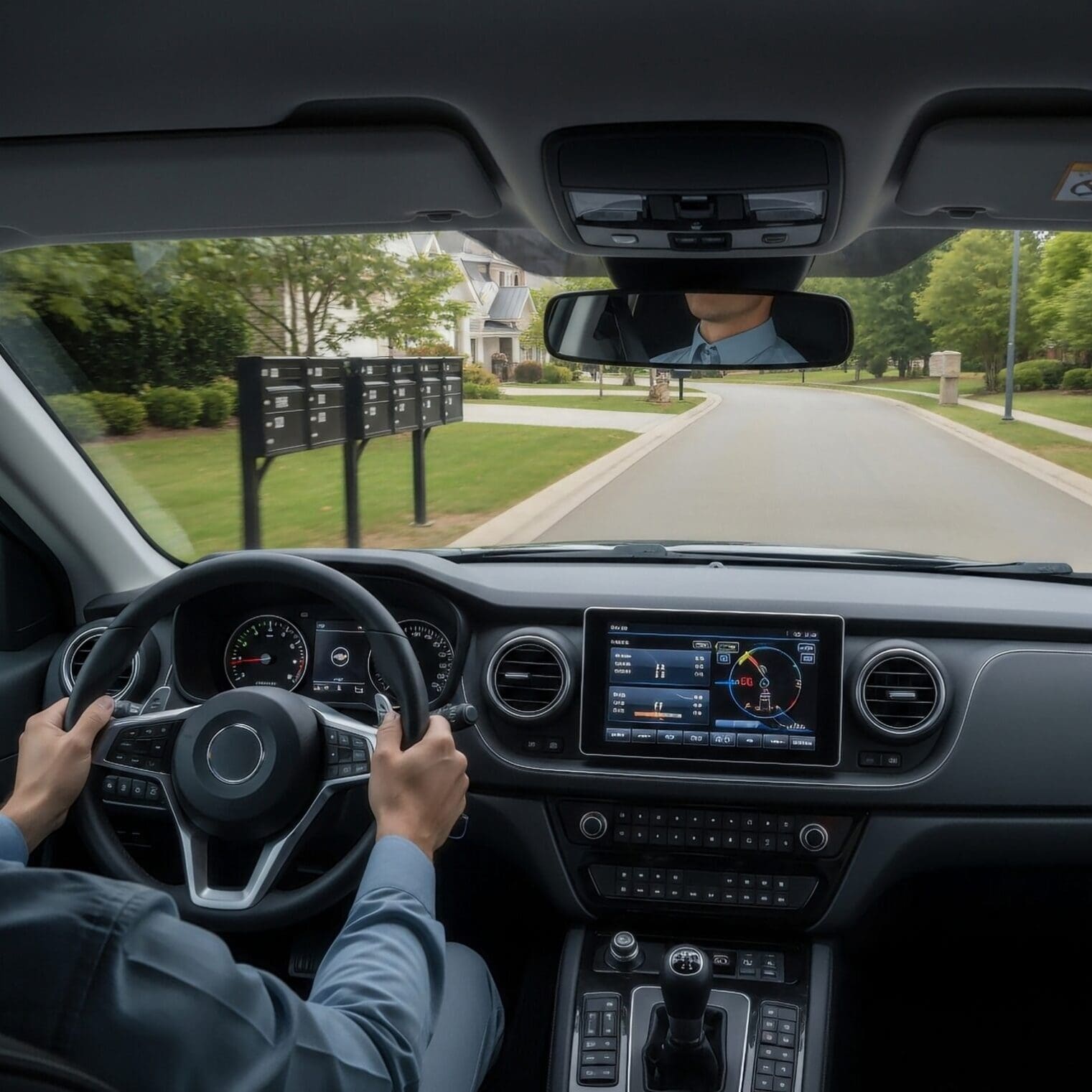
Real world verification of GPS locations for delivery pros.
Follow the pin. It’s incredibly easy to get into that mode. In fact, GPS navigation systems are more accurate than ever. Not to mention incredibly detailed. It’s possible to become so accustomed to following the pin, that landmarks and street signs feel obsolete. And what about the sun? It still rises in the East and sets in the West. Based on its position in the sky, the time of day is obvious. Therefore, the direction of travel, should be as well. It’s more than an old school technique. It’s old world logistics.
With this in mind, verification of an actual location is about more than a pin on a GPS map. This might be hard to believe but, pins are not always in the right place. That is to say, their actual location may not be the desired location. It’s a known phenomenon. In some cases it might be a zip code issue. Other times it’s a zoning issue due to new construction. Whatever it happens to be, the courier usually only finds out about it after chasing the pin.
Only to find that it wasn’t a good idea to follow the pin. However, rather than a lost experience it’s possible to gain valuable real world experience. For example, a better understanding of why the pin is in the wrong place. It’s important information for a couple of reasons. One reason, is for future reference if this becomes a regular drop-off location. The second reason is for guidance in recognizing the same situation, in some other location.
Real World Verification
Real world verification is more than GPS. In fact, a paper map is the same thing as the GPS map on a smart phone. Minus the pin. Plus there is no need to recharge the paper map and it doesn’t cost a monthly fee to use it. Real world verification comes into play when the street signs match the street names on the map. This goes for landmarks too. Although that requires some in-depth map attention. However, even a working familiarity with the main highways and interstates, in a given area, is useful for road logistics.
This might sound like a lot of wasted effort. Because the phone has the GPS map with the pin. So drive to the pin. But what if there isn’t a pin? Where will we drive to then? The actual address. Furthermore, the address can be found using a conventional map and general postal knowledge. This is sometimes referred to as old school. However, it’s actually real world verification of a physical address. When the courier arrives at the physical location of the drop-off there must be something that identifies that location as the location.
This is possible by looking at the numbers on the mailbox, or the numbers on the house. If it’s an apartment, the apartment number and building number, are the critical pieces of information. In fact, delivery pros are in the habit of using real world verification techniques to confirm GPS data. Not the other way around. This is especially important in the age of leave at the door deliveries.
GPS Locations
With a leave at the door delivery, there’s less proof of delivery. Sure there’s a picture of the helpless delivery stranded on a porch, but there’s no actual human contact. In fact, nothing says mission accomplished better than actually handing the delivery to the delivery customer. That’s another example of real world verification. It doesn’t rely on technology. It’s beyond technology. Furthermore, it’s basic and effective.
It also confirms the courier’s location, without the use of a pin on a map. Additionally, there is an advantage to not needing a marked route on a screen. It allows for full concentration on the road. Having the route memorized is a time saver in many ways. It allows for time to analyze and study street signs. And the speed of the vehicle slows, to allow for more time to scrutinize mailbox numbers. This happens automatically. There is an absolute technique to confirming mailbox numbers at night.

Between slowing down and using the high beam, low beam combo of the lights on the ride, it’s possible to navigate solely by the numbers at night. It’s how things were done before the smart phone. Furthermore, doubts were handled by calling for confirmation. If the customer didn’t answer the phone, the courier could try knocking, or ringing the doorbell. Since this was the days before a leave at the door delivery existed, the courier would know right away if it was the right location.
Location Verification
The GPS system in a delivery app is useful for more than just following a pin. It is also a linking mechanism. It connects the courier to the location. Every courier using a delivery app has been there at least once. Trying to confirm a delivery completion while outside the perimeter of the acceptable GPS pin location. In other words, being too far away from the pin to get verification of location.
This indicates that the pin is a critical part of the delivery. Even when it’s not in the right location. Furthermore, these days that is rare. It happens, but less and less. On the positive side, the GPS is a linking mechanism and it means real proof of courier location. Since a delivery confirmation can’t happen without the courier being in close proximity to the pin, a confirmed delivery means the courier got the real world verification.
In upcoming articles there will be a closer look at how to complete a delivery when the pin is in the wrong location. And it doesn’t always involve chatting with an agent from the app. Until then, stay safe out there.
Like, share and follow the anonymous courier on X at @Theanonymousc1. Like and follow here for the Facebook page The Anonymous Courier on FB. Also find The anonymous courier on Pinterest.

Click on the Subscribe link to receive updates on new posts, updated posts and new features. Join today.

Comment here